
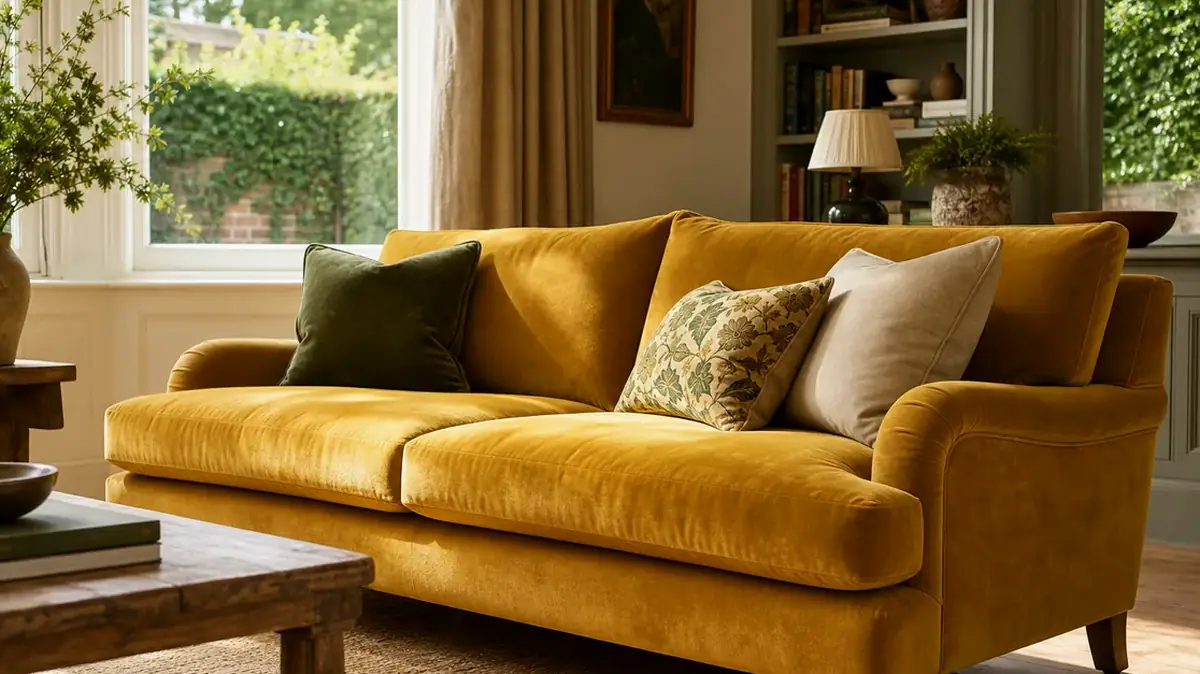
Lift the seat cushion on your sofa and there is usually a small label with a letter printed on it. That letter decides almost everything about how the job goes.
The code under the cushion
W means the fabric takes a water-based clean, which covers most modern cottons, polyesters and blends. S means solvent only; we will not wet those, and we say so on the phone before anyone drives over. WS allows either. X means vacuum only, and nobody should put liquid on it at all. No label? Then a hidden panel at the back gets tested first, and we watch how the colour and the handle of the fabric behave as it dries.
A sofa, step by step
The vacuum goes over everything first, including the gap along the back where crumbs and coins end up. The arms and the place your head rests take a pre-spray for body oil, which is the grey sheen you see on the front of the arms. Then comes the upholstery tool, a smaller head on the same machine we use for carpets, run at low pressure so the filling stays dry. Velvet and chenille are brushed in the direction of the pile while damp, so they dry without shading marks. We stand the cushions on their edges so both faces can dry.
Older furniture
Hertford’s period houses have their share of old chairs, and some are stuffed with horsehair or coir under the top fabric. Those fillings stain brown from the inside when they get wet, and the mark wicks up through the cover where you cannot reach it. We check by feel and by looking at the underside before we price anything. A chair like that gets a very dry surface clean, or a recommendation to see an upholsterer. Modern foam suites take the normal method without fuss.
Upholstery rates
| Item | Cost |
|---|---|
| Two-seater sofa | £57 |
| Armchair | £33 |
| Mattress | £35 |
| Dining chair (seat) | £13 |
| Curtains (short drop) | £35 |
| Curtains (long drop) | £42 |
A two-seater is £57 and every seat past the second is another £26, which makes a three-seater £83. Armchairs are £33, dining chairs £13, office chairs £11. A three-seater with two armchairs comes to £149. Fabric protector afterwards is £13 a seat. Size moves the price; the type of fabric does not.
Evening slots for commuters
Many of the converted maltings and riverside flats along the Lea are let to people on the Liverpool Street and Moorgate trains, and a sofa is easier to fit around a late slot. We work until 7pm, so a clean at six leaves the sofa fit to sit on by bedtime in a warm flat. Flats over the Fore Street shops mean carrying the kit up a narrow stair, which we are used to.
If the carpet under the sofa could do with it too, carpet cleaning has the room prices, and a mattress can go on the same visit. Marks that survive the clean have their own page, stain removal, and the full price list puts everything together.
Questions we get asked
Our sofa label says S. Can you still help?
Not with our machine. S fabrics need a solvent clean, and water can shrink them or leave rings. We tell you that on the phone so nobody wastes a trip, and we can still do the carpets and any W-coded chairs in the room.
How long before we can sit on it again?
Usually by the evening. Low pressure keeps the filling dry, so it is mainly the top fabric that has to dry. Open a window and leave the cushions on edge. Velvet takes a little longer than a flat weave.
We have a set of Victorian dining chairs. Are they worth doing?
Often, at £13 a chair. We look under the seat first. If the drop-in seats are stuffed with horsehair, we keep them nearly dry or leave them for an upholsterer, since wet horsehair can stain brown through the cover.
Do you add fabric protector?
If you want it, at £13 a seat. It goes on after the clean while the fabric is slightly damp. It slows a spill from soaking in, though a pale sofa still needs blotting straight away.